The Africa Oxford Initiative (AfOx)#
Professor Margaret Esiri MAE, Emeritus Professor of Neuropathology, Oxford University, and member of the Physiology and Neurosciences Section of Academia Europaea, would like to share with other Academy members the following short article which is a blend of personal experience and a report of outreach from academics at Oxford University to their peers in Africa.
The Africa Oxford Initiative (AfOx): a model for collaboration in the twenty first Century#
The Africa Oxford Initiative (AfOx) was founded in 2016. It started out as a conversation between a few researchers based at Oxford University and in African institutes. To quote its Co-founder and Director, Professor Kevin Marsh, ‘While we can’t really place a date on the start of AfOx, 28th October 2016 is as close as we get to a ‘birthday’. At its tenth anniversary, a year in which its few days’ of celebration brought over 300 former members of AfOx to Oxford, I’d like to introduce AfOx to Academia Europaea.
What are my credentials for doing this, you may ask. I am a retired clinical and experimental neuropathologist who spent my career at Oxford. But, as a new undergraduate at Oxford medical school I met and later married a fellow medical student from Nigeria, Frederick Esiri. (There were two Nigerian medical students in our intake of about 100 students in 1960, the year in which Nigeria attained its independence. I suppose their presence could be regarded as a very small part of a legacy from a history of Nigeria being part of the British Empire for up to 99 years.)
Be that as it may, we fast forward 58 years to 2018, the year of Frederick’s death after a lifetime spent partly in the UK, while bringing up our family, and partly in Nigeria, where he created and ran a primary health centre in Gembu, a town in a remote part of the country, near the Cameroon border, for over 20 years. During that time, I negotiated to work part-time in Oxford in order to spend part of each year in Gembu, helping in the clinic and writing about neuropathology.
After my husband’s death, it struck me that having met and married me, Frederick limited his time for helping to improve health outcomes in Nigeria, and I wanted to see if I could continue this aim. I didn’t want to suggest what was needed, but wanted to hear suggestions from people in Nigeria about what would be helpful. I was able to consult someone who had been a former Nigerian graduate student at Oxford, who now had a health consultancy in Lagos, and he suggested an acute stroke unit. He had in mind a private unit, but that would not have been of interest to Frederick, who was concerned to bring health care to the poor as well as the rich.
At that point I was unsure how to proceed until I happened to be told about AfOx, where I found on its website (https://www.afox.ox.ac.uk) an announcement that a neuroradiologist from Ibadan, Nigeria, Professor Godwin Ogbole, was to spend 6 months in Oxford as an AfOx Senior Clinical Fellow, mentored by a Professor of Neuroradiology in my own university department of Clinical Neurosciences. Covid intervened at this point, but with email contact I was able to discover that Ibadan had in mind the development of an acute stroke unit in the University College Hospital. From this point, close collaboration between colleagues at Ibadan, and a charity formed to develop our aims, the Frederick Foundation, has enabled us to move forward with attempts to improve the outcomes for sufferers from stroke in sub-Saharan Africa through advising and assisting acute stroke care, rehabilitation and prevention of stroke, the most common cause of tertiary hospitalisation in Nigeria and some other African countries. We are also instituting an exchange of medical students between the medical schools at Ibadan and Oxford to enable a few of them to receive their education about stroke and clinical neuroscience in their host medical school. This is the start of an intended collaboration between the two institutions for education and research in the years to come.
This brief account has so far focused on an academic venture in health that was related to AfOx, but AfOx goes way beyond that, with studentships and fellowships, mostly lasting up to one year, in any academic subject. People in Africa who want to participate apply through a competitive scheme and all of them arrange to have a mentor to assist their studies while in Oxford. Many departments and colleges at Oxford are keen participants in the AfOx schemes, providing a mix of academic collaboration, encouragement and accommodation. The scheme has benefited enormously in the last few years from a multimillion-pound partnership with the Mastercard Foundation, and, before that, from strategic university support. The Mastercard Foundation provides full support for 80 students a year to undertake a master’s degree in Oxford followed by an additional period in which the student or fellow returns to their country of origin, or another one in Africa, to develop or extend a career enabled by the knowledge and experience they have acquired while at Oxford. There are also opportunities for people to participate in courses that don’t involve the need to leave their own country.
Such schemes seem to me to provide a model that could be adopted by universities and other academic institutions in other European countries. Indeed, there may be many other places in Europe that are already running such schemes. I would be interested to hear about them. The value that might be derived from their widespread adoption could be extraordinary. It seems to me that members of Academia Europaea have the wherewithal to make it happen and to enable those undertaking such schemes to share, and learn from, their experiences.
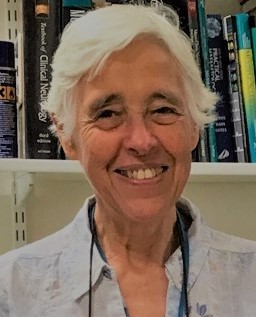
About Margaret Esiri#
Professor Esiri is Emeritus Professor of Neuropathology at Oxford University. She has a longstanding interest in inflammatory diseases of the nervous system, such as multiple sclerosis, and in dementia. Her recent dementia research has focussed on trying to understand the significance of damage to the small blood vessels in the brain as the second most common cause of dementia after Alzheimer’s disease. She has also contributed many studies on the neuropathology of Alzheimer’s disease. Prof. Esiri was elected as member of the Physiology and Neurosciences Section of Academia Europaea in 2023.